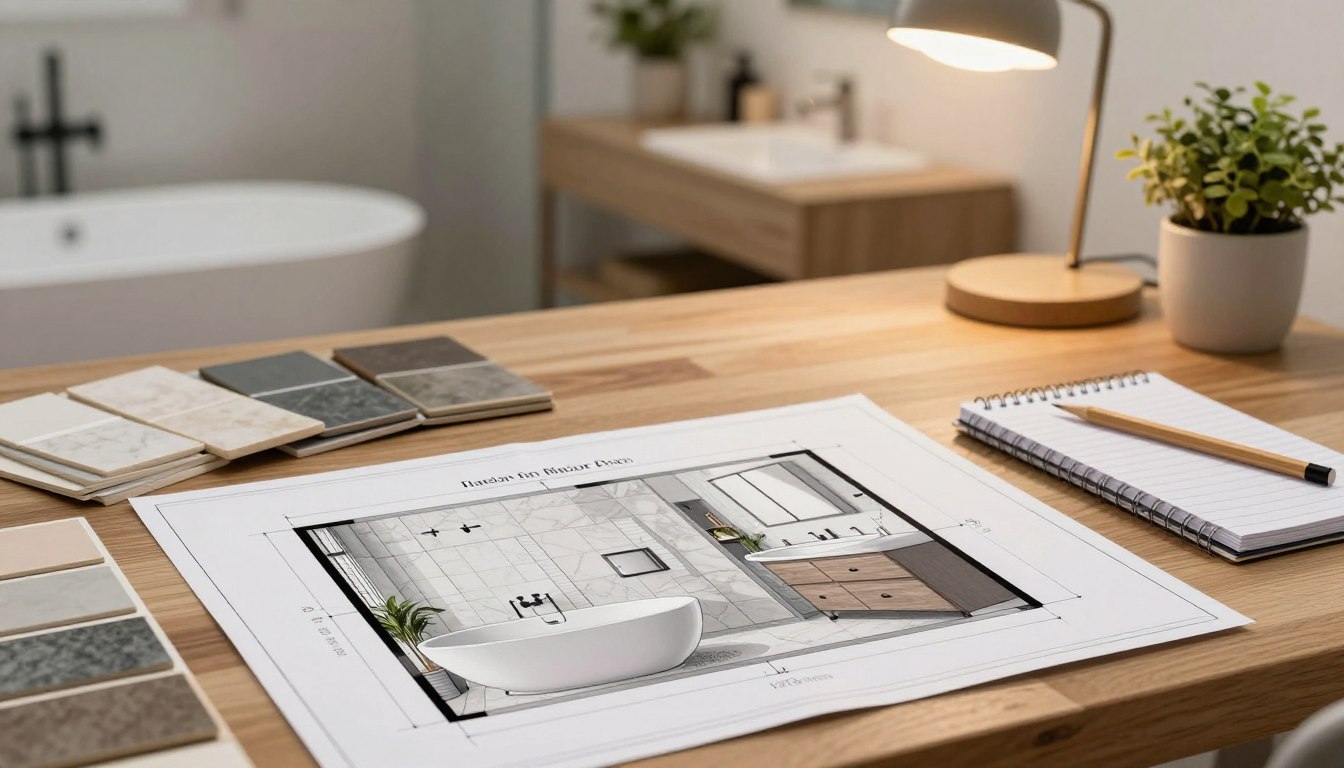
Did you know nearly 40% of home improvement projects go over budget? This is often because they weren’t well planned. This bathroom remodeling planning guide is your key to a smooth project. It helps you avoid unnecessary stress and saves money.
We’ve broken down the process into five easy steps. These steps cover setting goals to making your final design choices. By using these bathroom renovation tips, you can dodge common money-wasters. We aim to help you create a space that’s both beautiful and practical for your daily life.
Key Takeaways
- Set clear goals early to avoid going over budget.
- Choose high-quality materials for lasting value.
- Stick to a timeline to keep work moving and reduce downtime.
- Opt for efficient layouts to use your space wisely.
- Make design choices that are both trendy and timeless.
Bathroom Remodeling Planning Guide: Set Goals, Scope, and a Realistic Budget
Planning a bathroom remodel is about mixing your dream look with what your home can handle. Knowing the steps to remodel a bathroom helps you manage your project smoothly.
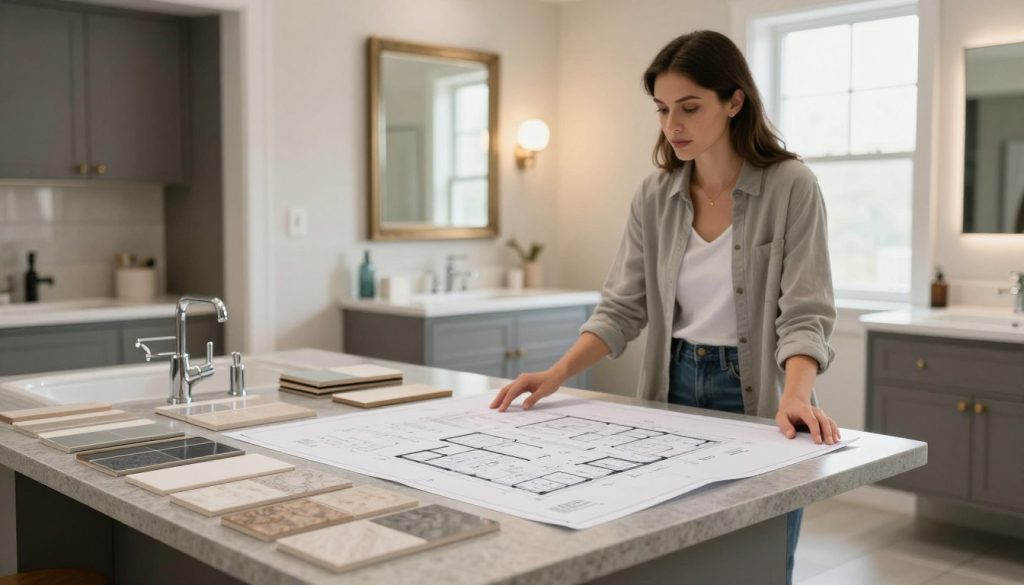
Define Your Bathroom Renovation Priorities and Must-Haves
Separate Essential Repairs From Cosmetic Upgrades
First, list everything you want to change. Make a clear difference between critical repairs and cosmetic changes like new paint or vanity hardware.
Focus on the structure first. Fixing hidden problems before adding fancy touches is key.
Plan for Accessibility, Storage, Ventilation, and Daily Use
Think about how your family uses the bathroom every day. If you plan to stay in your home long-term, consider walk-in showers and grab bars.
Don’t forget about storage and ventilation to avoid mold. A well-planned layout makes your daily routine easier.
Measure the Space and Document Existing Conditions
Record Room Dimensions, Fixture Locations, Doors, and Windows
Getting the room’s measurements right is critical. Use a tape measure to note the room’s size, door, window, and plumbing locations.
A detailed floor plan helps you see where new items will go. This avoids mistakes when buying materials or installing cabinets.
Check Plumbing, Electrical, Moisture, and Structural Issues
Look for water damage or electrical dangers in walls and floors. Older homes might need updated wiring for safety.
Finding these problems early helps adjust your plan. Ignoring them can lead to expensive delays later.
Build a Budget With a Contingency Fund
Estimate Labor, Permits, Materials, Fixtures, and Disposal Costs
When planning a bathroom remodel, list all possible costs. Get labor quotes from licensed contractors and include permit fees, disposal costs, and fixture prices. A detailed spreadsheet helps track your spending.
Reserve 10 to 20 Percent for Unexpected Problems
Even with careful planning, surprises can happen during demolition. It’s highly recommended to save 10 to 20 percent of your budget for unexpected costs.
This fund protects you from stress caused by unexpected repairs or price increases. Having this safety net is key to a successful bathroom remodel.
Plan the Design and Choose Materials That Save Money Long Term
Creating a stylish bathroom doesn’t have to break the bank. Focus on budget-friendly bathroom remodeling to get a high-end look without the high cost. The secret is to optimize bathroom design to use your space wisely.
Optimize Your Bathroom Design Without Moving Plumbing
Keeping your plumbing fixtures in place can save a lot of money. Moving pipes and water lines requires professional help, which can quickly increase your budget.
Compare Layout Changes With Same-Location Fixture Replacements
Instead of tearing down walls, swap out your vanity, toilet, or shower head for new ones. This saves thousands on plumbing and electrical work. By keeping the layout the same, you can spend more on quality finishes that really make a difference.
Use Lighting, Mirrors, and Storage to Improve a Small Bathroom
You don’t need to expand your bathroom to make it feel bigger. Smart lighting and big mirrors can make it seem deeper and brighter. Also, vertical storage helps clear clutter, making the room feel more open.

Select Durable, Budget-Friendly Bathroom Materials
Choosing the right materials is key for saving money in the long run. Look for surfaces that resist moisture and are easy to clean.
Compare Porcelain Tile, Ceramic Tile, Luxury Vinyl, and Waterproof Wall Panels
Choosing the right flooring and wall covering is important. Use the table below to compare options based on durability and cost.
| Material | Durability | Maintenance | Cost |
|---|---|---|---|
| Porcelain Tile | High | Low | Moderate |
| Ceramic Tile | Moderate | Moderate | Low |
| Luxury Vinyl | High | Very Low | Low |
| Wall Panels | High | Very Low | Moderate |
Choose Water-Resistant Cabinets, Countertops, Grout, and Hardware
Always choose water-resistant materials in humid areas. Go for high-quality grout and durable hardware to avoid costly repairs later.
Balance Style, Maintenance, and Replacement Costs
It’s tempting to follow every trend, but timeless choices save money. Choosing classic styles means you won’t need to update often.
Choose Timeless Finishes for Permanent Fixtures
Invest in items like bathtubs, shower valves, and vanity cabinets. Opt for neutral colors and classic designs that stay stylish for years. This way, your investment stays relevant as your taste changes.
Save on Decorative Accessories You Can Upgrade Later
Save money by choosing affordable items for easy swaps. Towel bars, light fixtures, and drawer pulls are great for saving. If you change your decor later, these items can be replaced without a big renovation.
Follow the Steps to Remodel a Bathroom Efficiently
Renovating your bathroom needs a clear plan to avoid delays. Use an essential bathroom renovation checklist to steer clear of common mistakes. This method helps you manage your time and budget well, ensuring a top-notch finish.
Finalize Plans, Permits, Products, and the Project Schedule
Confirm Measurements, Product Lead Times, and Installation Requirements
Before buying anything, double-check your space’s measurements. Precision is key to avoid ordering the wrong materials or fixtures. Also, check with suppliers about product lead times to ensure timely delivery.
Obtain Required Local Permits and Schedule Inspections
Find out which permits you need from your local building department. Getting these early saves you from costly delays. Book your inspections ahead to keep your project on schedule.
Prepare the Bathroom and Demolish Safely
Protect Nearby Rooms and Shut Off Water and Electricity
Seal off nearby rooms with plastic sheeting to keep dust out. Always turn off the water and electricity to avoid accidents. Safety is your top concern during demolition.
Identify Hazardous Materials Before Demolition
Older homes might have asbestos or lead paint. If you think this might be the case, get a professional test before starting. Proper disposal of hazardous waste is a must in most states.
Complete Rough-In Work Before Closing the Walls
Coordinate Plumbing, Electrical, Ventilation, and Framing Changes
After clearing the space, focus on the room’s structure. Make sure plumbing, electrical, and ventilation are in the right place. Proper framing is essential for heavy fixtures like wall-mounted vanities.
Test for Leaks and Verify Inspection Requirements
Do a pressure test on new plumbing lines before sealing the walls. Look for any signs of moisture or drips. An inspector’s check now saves you from future wall openings.
Install Surfaces, Fixtures, and Finishing Details in Order
Complete Waterproofing, Flooring, Walls, Cabinets, and Countertops
Start with waterproofing membranes in the shower area. Then, install flooring and wall tiles, followed by vanity cabinets and countertops. Working in this order protects your new surfaces.
Install the Toilet, Sink, Shower, Tub, Lighting, and Accessories
After setting the heavy surfaces, install plumbing fixtures and lighting. Finish with hardware like towel bars, mirrors, and robe hooks. These touches complete your design.
Use DIY Bathroom Renovation Ideas Without Creating Expensive Delays
Handle Painting, Hardware, Demolition, and Simple Finish Work Carefully
Smart diy bathroom renovation ideas can save you money. Tasks like painting, installing hardware, and basic demolition are perfect for homeowners. Just take your time for a professional look.
Hire Licensed Professionals for Plumbing, Electrical, and Structural Work
While DIY is good for finishes, don’t tackle complex plumbing or electrical work yourself. Licensed pros ensure your home is safe and up to code. Investing in expert labor for these critical systems prevents costly mistakes.
| Phase | Task | Responsibility |
|---|---|---|
| Planning | Permits & Ordering | Homeowner |
| Demolition | Removal & Cleanup | DIY or Pro |
| Rough-In | Plumbing & Electrical | Licensed Pro |
| Finishing | Painting & Hardware | DIY |
Conclusion
Successful bathroom renovations start with careful planning and a realistic budget. This way, you avoid delays by keeping your goals clear and your schedule organized. It’s all about starting right.
Choosing the right materials is key. Look for items that are water-resistant and last long. Brands like Kohler or Delta are great because they’re durable and easy to clean. This ensures your bathroom stays beautiful and functional for years.
Following a logical order in your renovation makes everything easier. It helps avoid costly mistakes and keeps your contractors focused. You’ll feel confident knowing every choice you make is moving you closer to your dream bathroom.
Remember these tips as you start your renovation. You’re now ready to manage your project with care. Begin planning today to create a bathroom you’ll love every day.